

Summarise this article with AI
On this page · 9 sections
A tyre can look acceptable while it is still fitted to the car, then show its limits on the first wet morning, hard stop or highway trip. If you are wondering when should tyres be replaced, tread depth is only part of the answer. Age, visible damage, uneven wear and changes in how your vehicle drives all matter.
Tyres are the only part of your vehicle designed to stay in contact with the road. They affect braking, steering, cornering and stability, so replacing them at the right time is a practical safety decision, not simply an item to put off until the next service.
When should tyres be replaced for safety?
A tyre should be replaced when it no longer has enough safe tread, has damage that cannot be reliably repaired, is deteriorating with age, or is causing handling concerns. There is no single kilometre figure that suits every vehicle. A lightly driven family car, a work ute carrying loads and a European SUV with performance tyres will all wear tyres differently.
Your driving conditions also make a difference. Regular freeway travel may wear tread slowly and evenly, while stop-start commuting, rough roads, wheel alignment issues and frequent short trips can shorten tyre life. In Geelong and surrounding areas, changing weather is another reason not to wait until tyres are at their absolute limit.
Tread is at or close to the legal limit
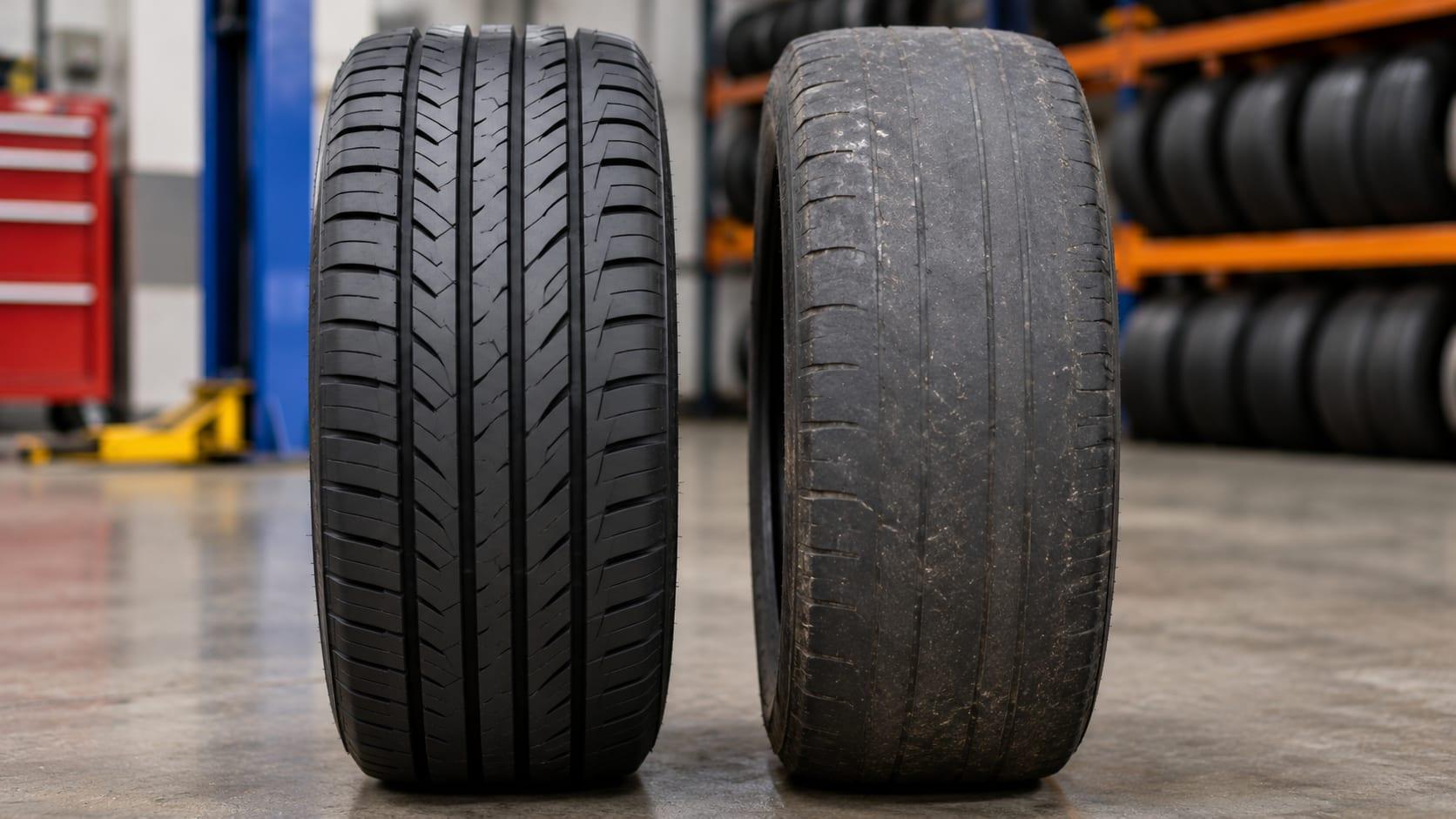
In Victoria, passenger vehicle tyres require a minimum tread depth of 1.5 mm across the relevant tread area. Most tyres also have built-in tread wear indicators, which are small raised bars set into the main grooves. When the surrounding tread is level with these bars, the tyre is worn out or very close to it.
The legal minimum is a baseline, not a target for everyday driving. A tyre can still be legal at 1.5 mm yet offer noticeably less grip in heavy rain, particularly when braking or turning. As grooves become shallow, they cannot clear water as effectively. That raises the risk of aquaplaning and increases stopping distances on wet roads.
Many drivers choose to plan replacement once tyres approach around 3 mm, especially before winter, a long holiday drive or a period of regular wet-weather travel. It is sensible preventative maintenance, not unnecessary upselling.
Check for uneven tyre wear
Even if there is plenty of tread in one part of the tyre, uneven wear can mean replacement is needed sooner. Run your hand carefully across the tread and look at both inner and outer shoulders. The inner edge is easy to miss without turning the steering wheel or having the car inspected on a hoist.
Wear concentrated on the centre of the tread can point to over-inflation. Excessive wear on both outer shoulders often suggests the tyres have been run under-inflated. One-sided wear may indicate wheel alignment or suspension problems, while patchy or scalloped wear can be linked to worn shocks, struts, balancing issues or damaged suspension components.
Replacing a tyre without addressing the cause can be an expensive short-term fix. The new tyre may wear the same way, and the underlying fault may affect steering, braking and ride quality. A proper inspection should consider tyre pressures, wheel alignment, suspension condition and steering components together.
Damage that means a tyre should come off
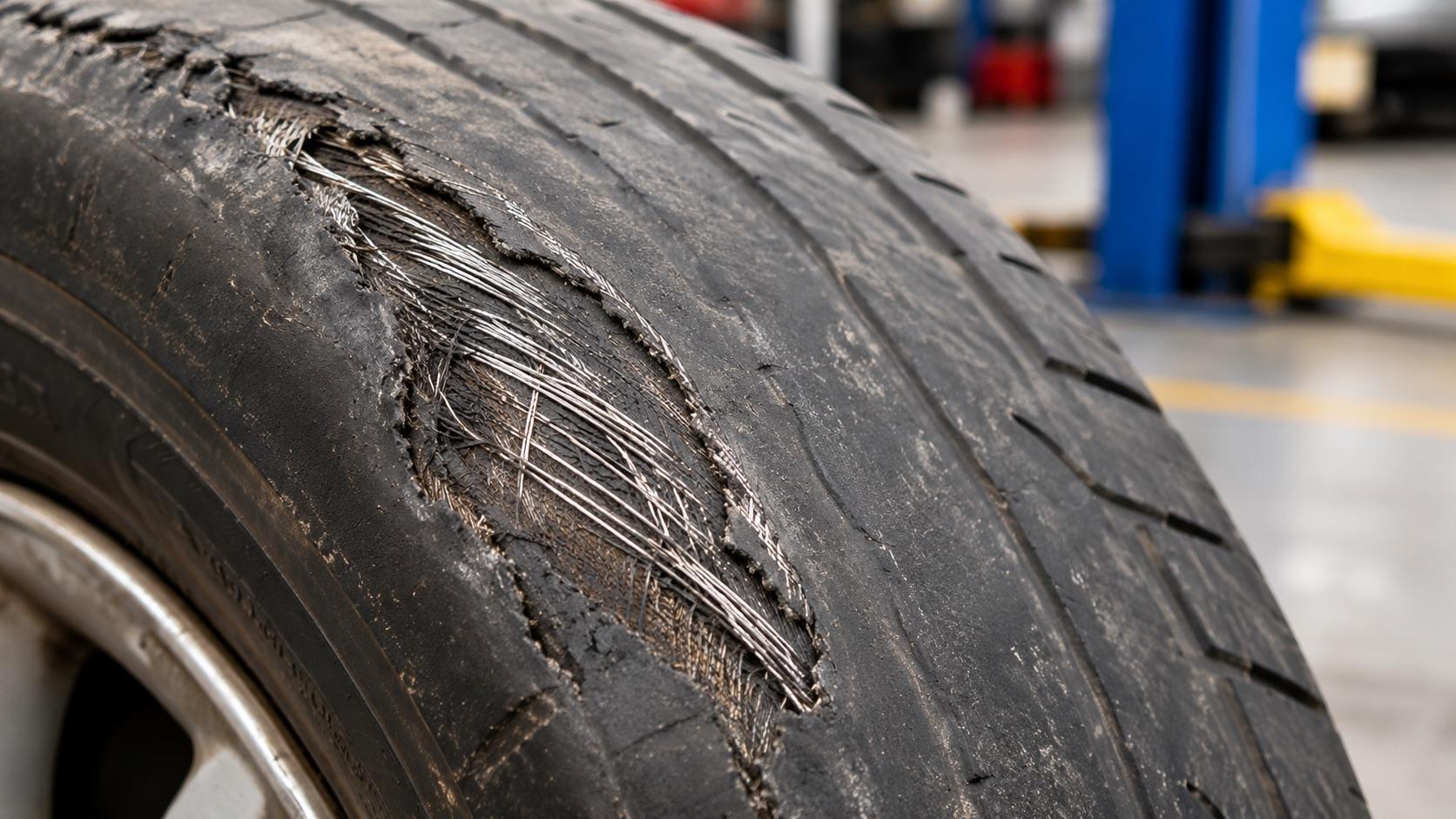
Some tyre damage is obvious. If you can see cords, fabric or steel belts through the rubber, the tyre is unsafe and needs immediate replacement. The same applies to a sidewall bulge, deep cut, separation in the tread, or a tyre that has been driven flat.
Sidewall damage deserves particular caution. The sidewall flexes constantly as you drive, and it does not have the same repair options as the central tread area. A bulge often means the internal structure has been damaged by a pothole, kerb strike or impact. It may hold air for now, but it can fail without warning.
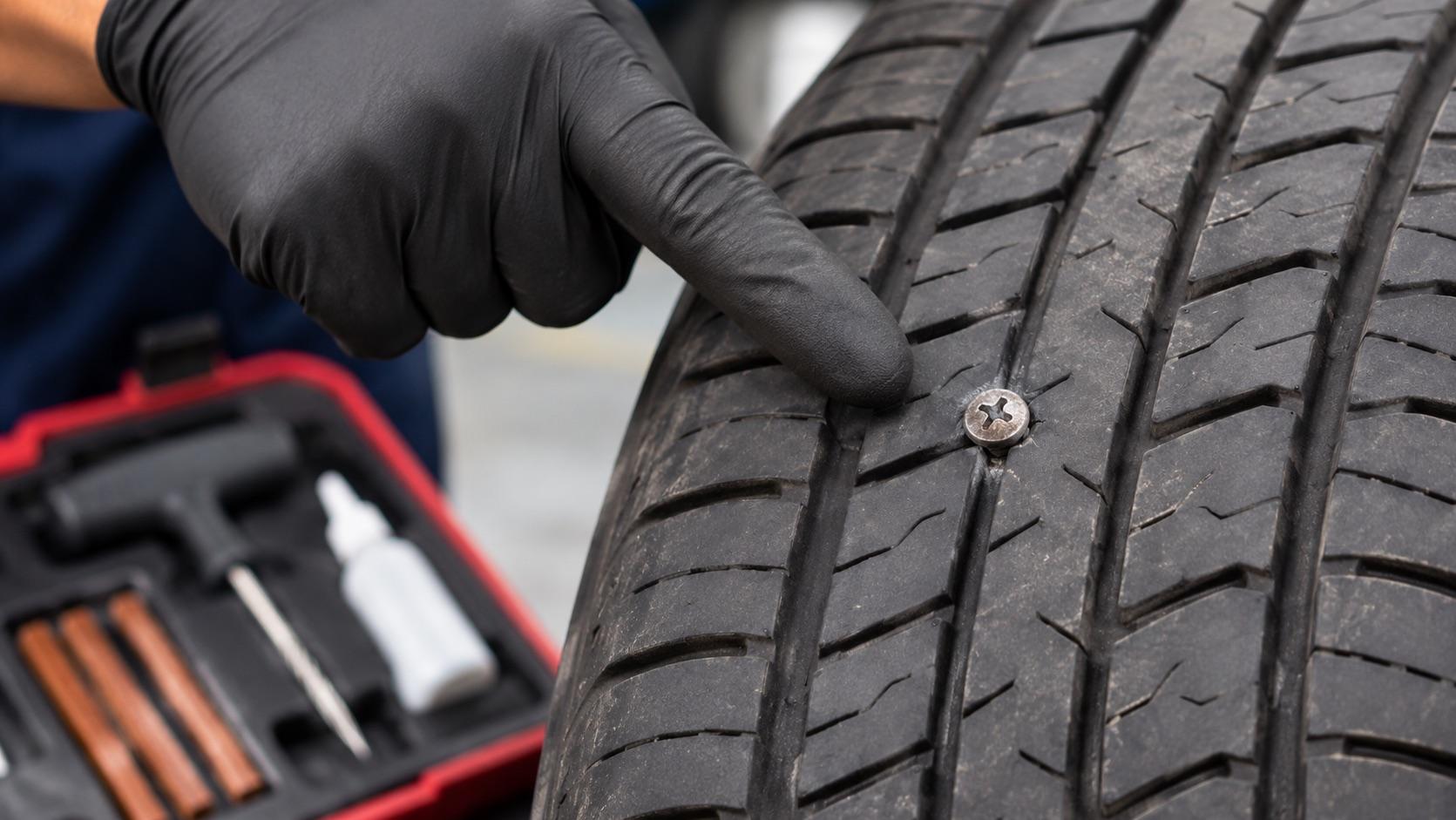
Not every puncture means a new tyre is required. A small, straightforward puncture in the central tread area may be repairable after the tyre has been removed and inspected internally. A puncture near the shoulder, multiple punctures, prior poor repairs or internal damage can make replacement the safer option. Honest advice should be based on the tyre's condition, not a blanket rule.
Cracks, hard rubber and tyre age
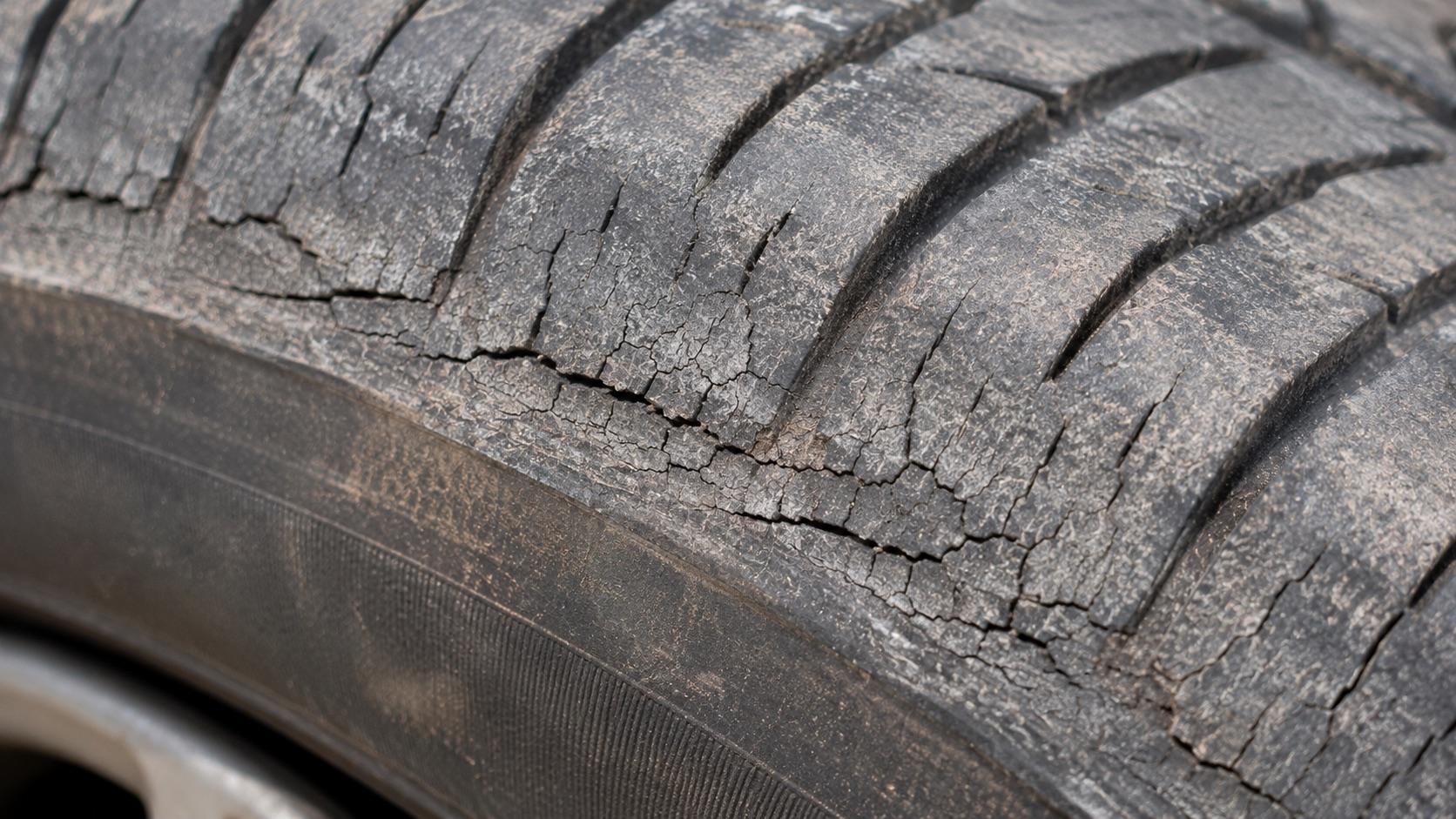
Tyres age even when they have travelled very few kilometres. Sunlight, heat, moisture and long periods of sitting can dry the rubber over time. Fine surface cracking around the sidewall or between tread blocks may be early deterioration, while deeper cracks, stiffness or widespread crazing are stronger signs that replacement is due.
Check the tyre's date code on the sidewall. The final four digits show the week and year it was made. For example, 1823 means the tyre was manufactured in the 18th week of 2023. This does not create an automatic expiry date, because storage, climate, usage and tyre construction all matter. However, tyres should be inspected more closely once they are around five years old, even if the tread looks healthy.
Many manufacturers recommend replacing tyres by 10 years from their manufacture date at the latest, including a spare that has rarely been used. Your vehicle handbook and tyre manufacturer guidance should take priority where specific recommendations apply.
Pay attention to how the car feels
Your vehicle often gives you useful warning signs before a tyre becomes visibly bald. If it pulls to one side, feels less settled in the wet, vibrates through the steering wheel, or produces a new rhythmic humming noise, have it checked. These symptoms do not always mean the tyres need replacing. A wheel balance issue, wheel alignment fault, worn wheel bearing or suspension problem may be responsible.
Still, tyres should be part of the inspection. A vibration that appears at particular speeds can be caused by an out-of-round tyre, internal tyre damage or an imbalance. A vehicle that wanders or needs frequent steering correction may have low pressures, unevenly worn tyres or a mechanical fault. It is safer and usually cheaper to investigate early than wait for a breakdown or further damage.
Replacing one tyre, two tyres or the full set
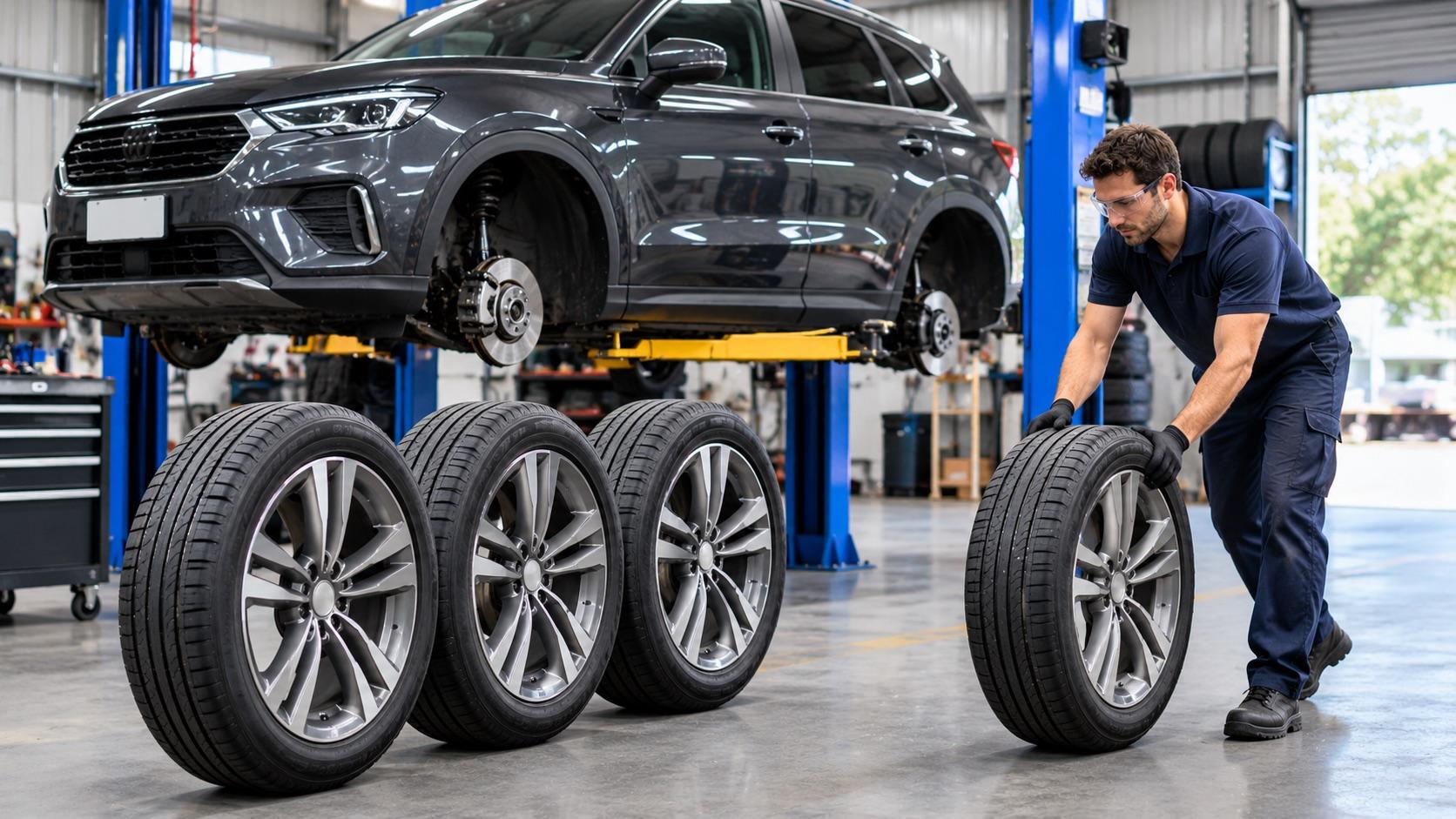
The right replacement approach depends on the vehicle, tyre condition and drivetrain. If only one tyre is damaged and the others are relatively new, a single matching replacement may be suitable. The replacement should match the required size, load rating and speed rating specified for the vehicle.
Where two tyres on the same axle are worn, replacing them as a pair is generally the better choice. Tyres with substantially different tread depths on one axle can affect grip and braking balance. On many vehicles, the newer pair is fitted to the rear axle to help maintain rear-end stability on wet roads, although the vehicle manufacturer's advice should be followed.
All-wheel-drive vehicles can be more particular. Significant differences in rolling circumference between tyres can place extra strain on drivetrain components. Some AWD systems may require closely matched tyres or, in some cases, a full set. This is worth checking before authorising a single replacement, especially on BMW, Audi, Mercedes-Benz and Volkswagen vehicles with all-wheel-drive systems.
Do not forget the spare tyre
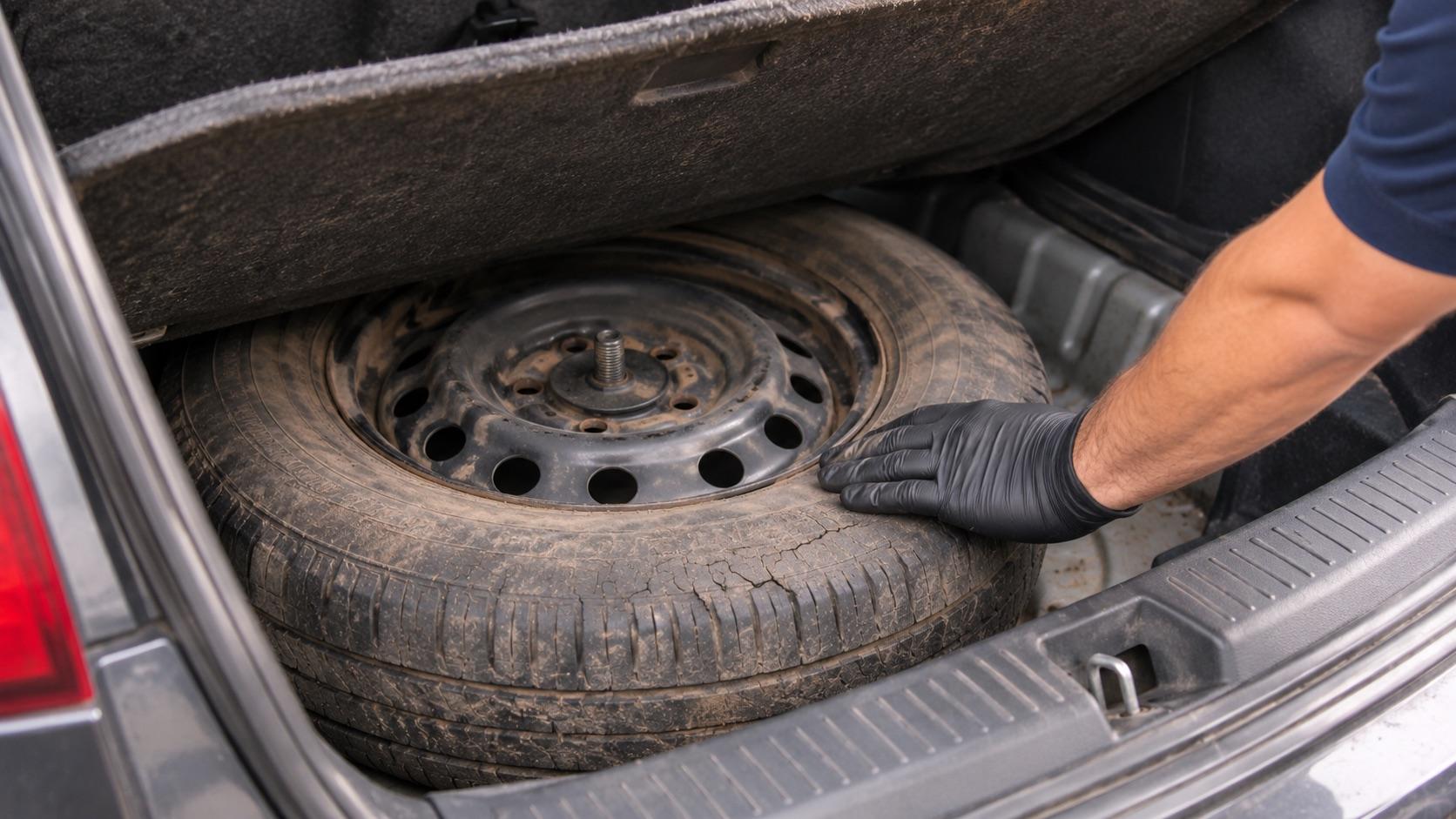
A spare tyre can be forgotten for years, often until the day it is urgently needed. Check its pressure, tread and age whenever the other tyres are inspected. A full-size spare may be old enough to have cracks or hardened rubber despite looking unused. A space-saver spare has speed and distance restrictions, so it is intended to get you safely to a repairer, not to remain on the car.
Tyre condition can also affect a roadworthy inspection. Worn tread, exposed cords, unsuitable tyre sizes, sidewall damage and poor overall condition can prevent a vehicle from meeting requirements. If you are selling, buying or re-registering a vehicle, checking tyres early avoids a rushed replacement later.
Make tyre checks part of routine servicing
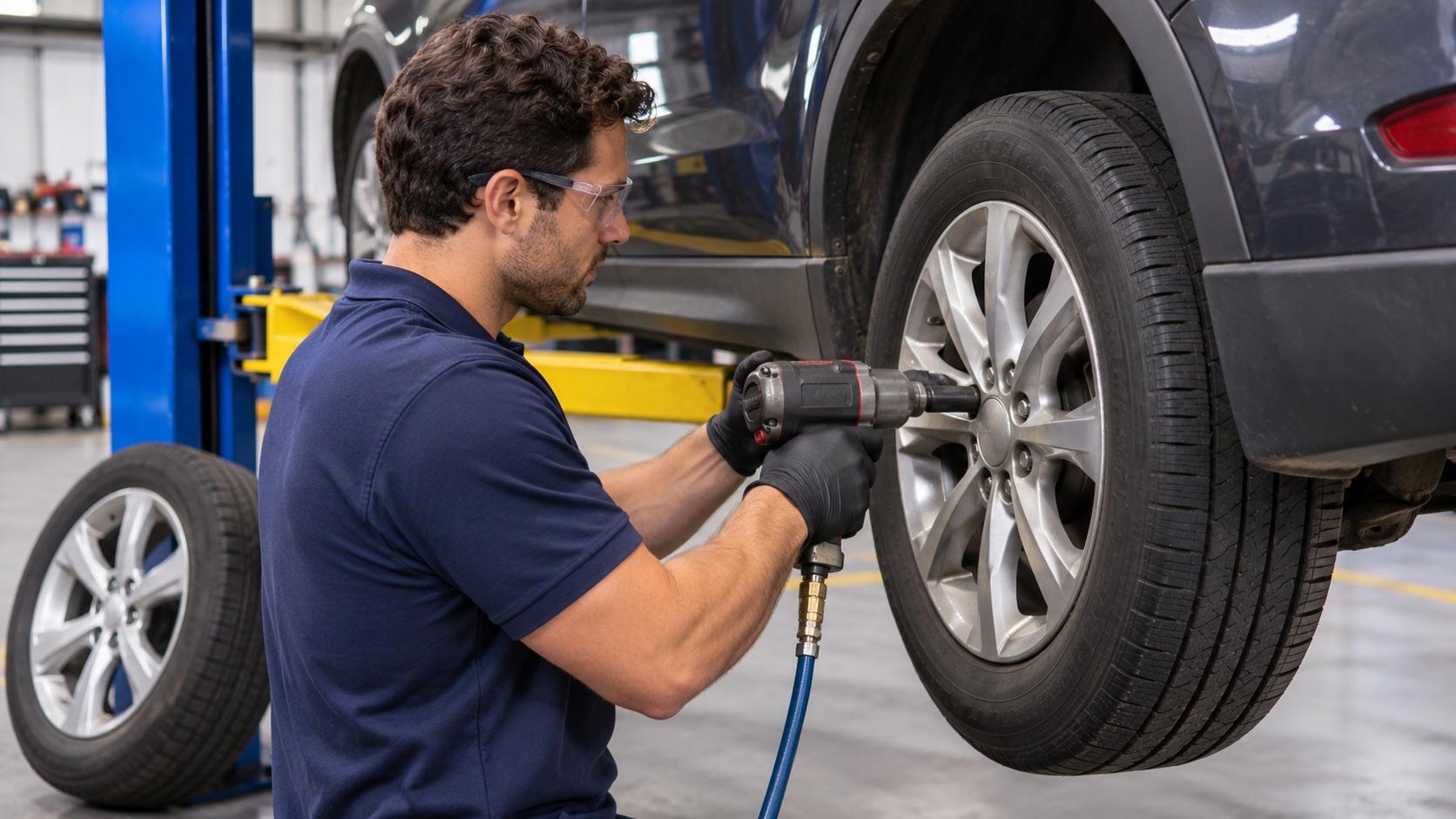
A quick monthly look at tread and sidewalls is worthwhile, but a professional inspection gives a clearer picture. During a service, tyre pressures can be set to the vehicle placard, tread can be measured accurately, and hidden inner-edge wear can be identified. Rotating tyres at suitable intervals can help them wear more evenly, provided they are the same type and size and the vehicle's requirements allow it.
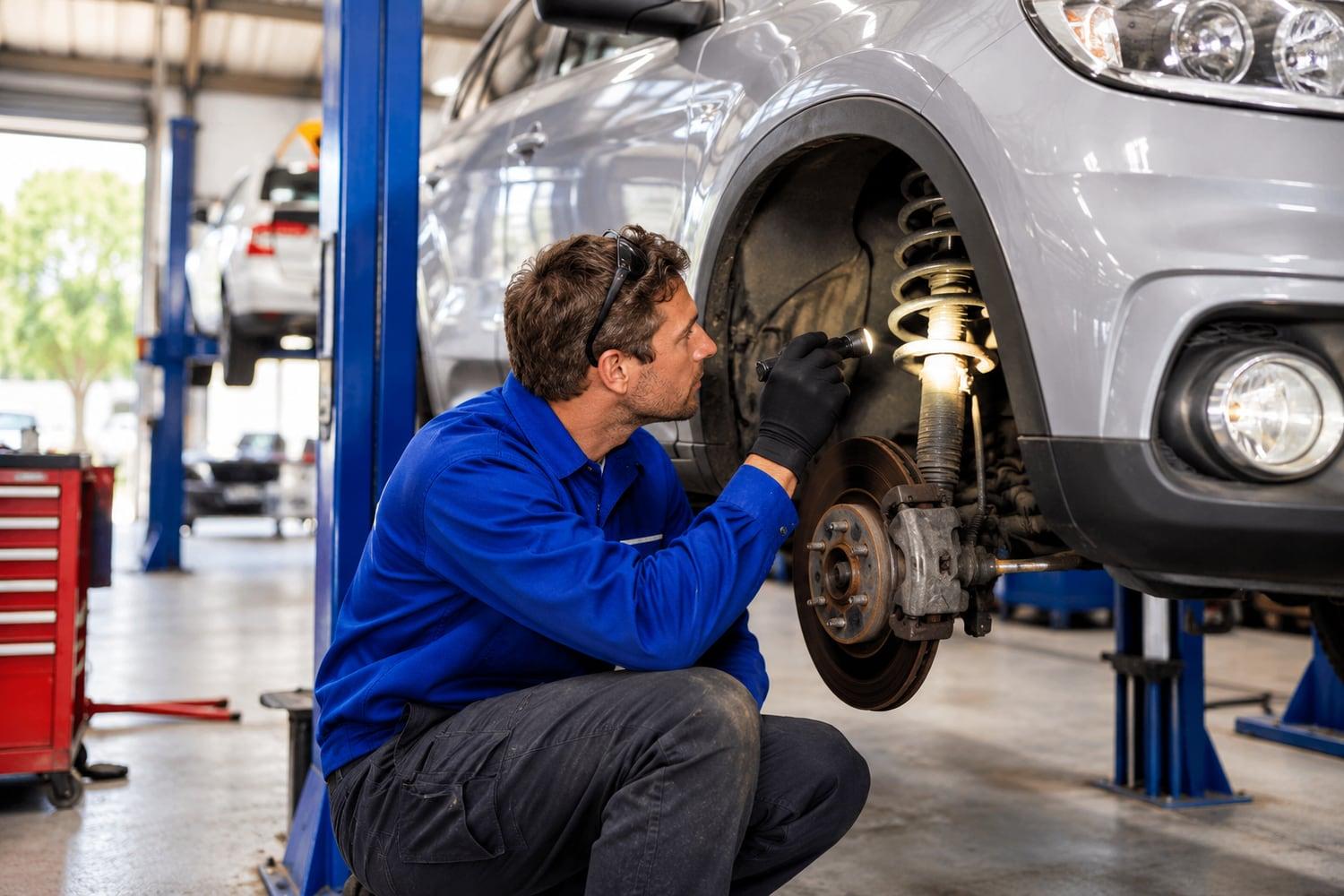
At Armstrong Creek Motors, we can inspect your tyres alongside the brakes, suspension and steering components that influence how they wear. You will receive plain advice on whether a tyre needs immediate replacement, can be safely monitored or needs an underlying issue repaired first.
If your tyres are nearing the wear indicators, have visible cracking or simply do not inspire confidence in the rain, book an inspection before your next long drive. A clear answer now can prevent a stressful roadside problem later.
Was this article helpful?