

Summarise this article with AI
On this page · 8 sections
Key takeaways
- The cost of brake pad replacement at a workshop is typically about $280 to $1,100 per axle, depending on the car and what else the brakes need.
- The lower end is pads and a brake service on a common small car. The upper end is European cars, 4WDs and vans, or jobs that need new rotors.
- Front pads usually wear faster than rear pads because the front brakes do most of the stopping.
- Rotor machining or replacement, a brake fluid flush, wear sensors and caliper repairs are the usual extra costs.
- Have the brakes checked if you hear grinding, feel vibration through the pedal or the pads are under 3 mm.
The cost of brake pad replacement at a workshop in Australia is typically about $280 to $1,100 per axle. That covers new pads, labour and a proper check of the brakes. A common small car with healthy rotors sits near the lower end. A European car, a 4WD or a commercial van, or any car that also needs new rotors, sits towards the top. Caliper repairs, wear sensors and a brake fluid flush are extra if your car needs them.
What moves the price most is the vehicle you drive, the type of pad it needs and the condition of the rotors (the metal discs the pads squeeze against). How long the pads were left also matters. Pads replaced on time are a simple job. Pads worn down to the metal can take the rotors with them.
The figures below are a guide only, based on current Australian price guides. Prices vary by vehicle, so the only exact number is a written quote for your car.
How much do brake pads cost in Australia?
Brake pads are sold as a set for one axle, which means both front wheels or both rear wheels. Parts alone usually cost between about $50 and $400 per axle set, depending on the pad material. The table shows parts prices only.
| Pad type | Price per axle set | Best for | Lifespan |
|---|---|---|---|
| Organic | $50 to $120 | Small, light cars and gentle city driving | 30,000 to 50,000 km |
| Semi-metallic | $70 to $180 | SUVs, utes, 4WDs and towing | 40,000 to 60,000 km |
| Ceramic | $100 to $250 | Daily drivers who want quiet, low-dust braking | 50,000 to 70,000 km |
| Performance or European | $150 to $400+ | BMW, Audi, Mercedes-Benz, Volkswagen and performance cars | 30,000 to 60,000 km |
Lifespan depends heavily on how and where you drive. Stop-start traffic, hills, towing and heavy loads all wear pads faster than steady highway kilometres.
Front vs rear brake pads
Front pads usually wear out first, often well before the rears. When you brake, the car's weight shifts forward, so the front brakes do most of the stopping. Front pads and rotors are also usually larger, so a front axle set can cost a little more than a rear set.
You do not always need to replace front and rear pads together. Pads are replaced in pairs across the same axle, and a good mechanic will measure all four corners and tell you which axle actually needs them.
Brake pad replacement labour and service cost
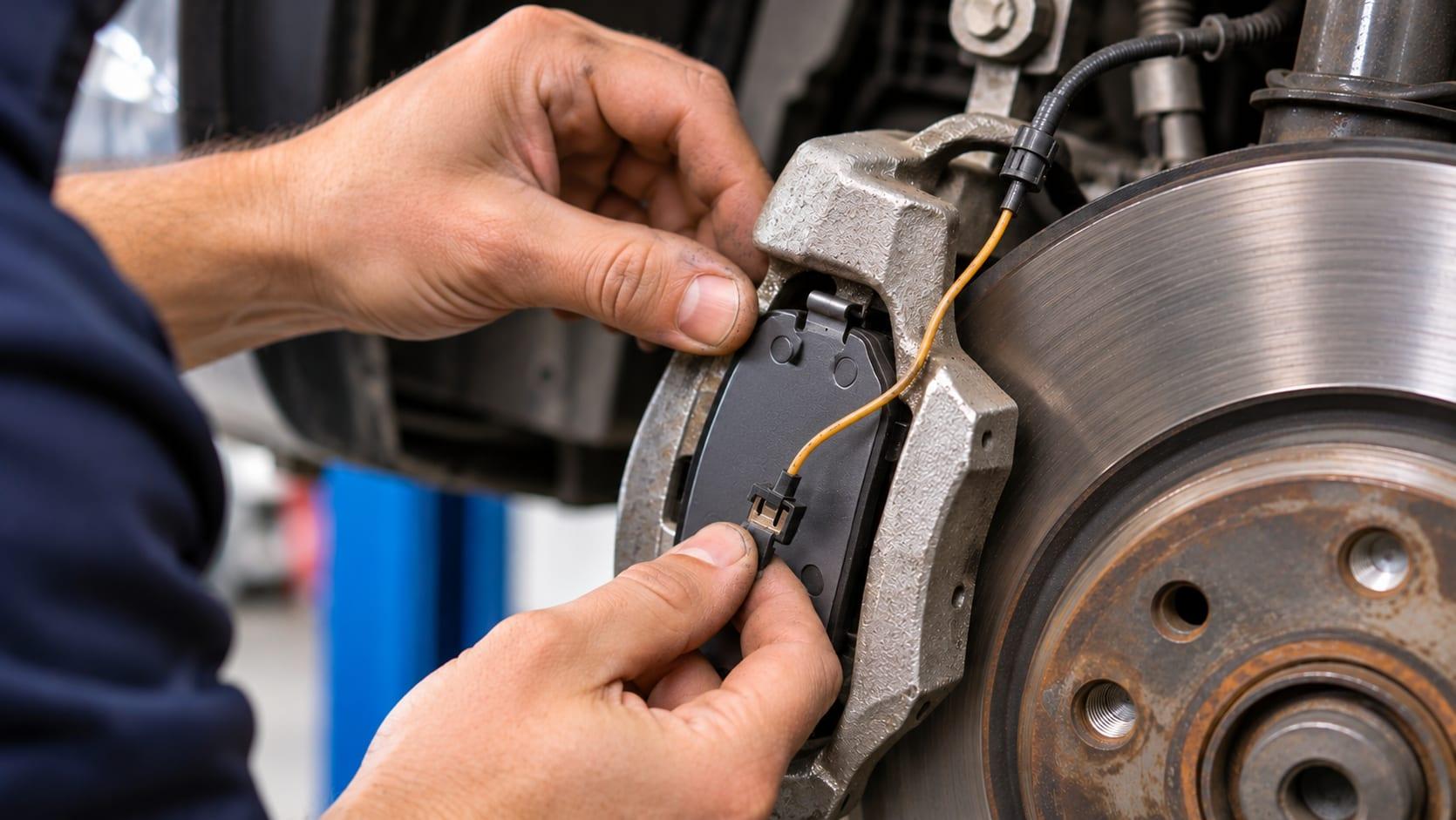
Replacing pads on one axle takes about an hour of workshop time on most cars, or 1.5 to 2 hours when the rotors are machined or replaced at the same time. With labour rates of roughly $100 to $180 an hour, labour typically adds about $100 to $180 per axle for pads, and up to about $360 with rotors. Cars with electronic parking brakes, seized hardware or wear sensors take longer.
What a proper brake service includes
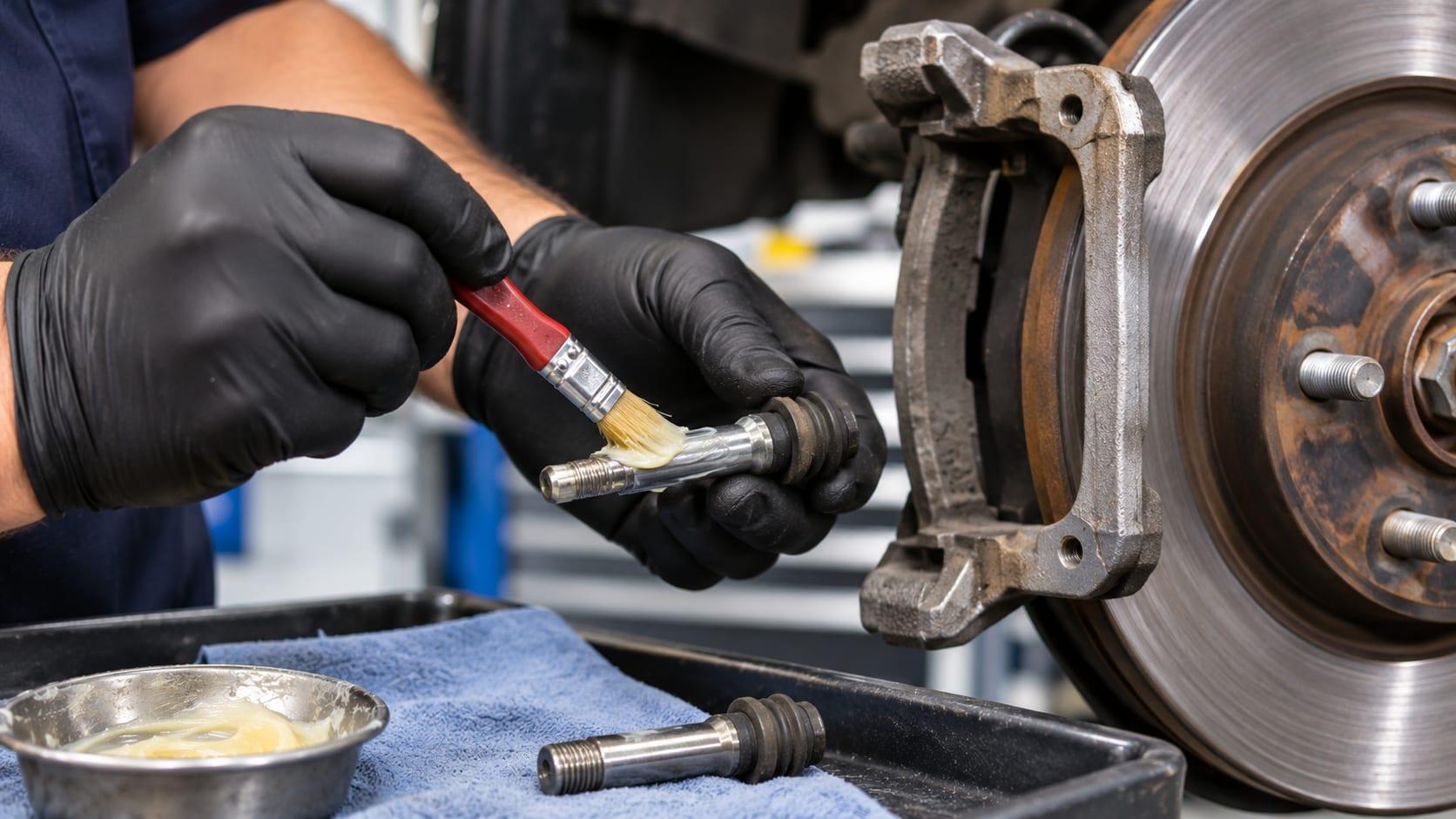
A brake pad replacement should be more than swapping pads. A proper job includes:
- Inspection of pads, rotors, calipers, hoses and lines on the axle being worked on
- New pads that suit the vehicle and how you drive
- Cleaning and lubing the slide pins, the guide pins the caliper moves on, so the pads wear evenly and do not stick
- Checking the rotors for thickness, scoring and warping
- Checking the brake fluid level and condition
- A road test to confirm the brakes feel right before the car goes home
Extra costs that can come up
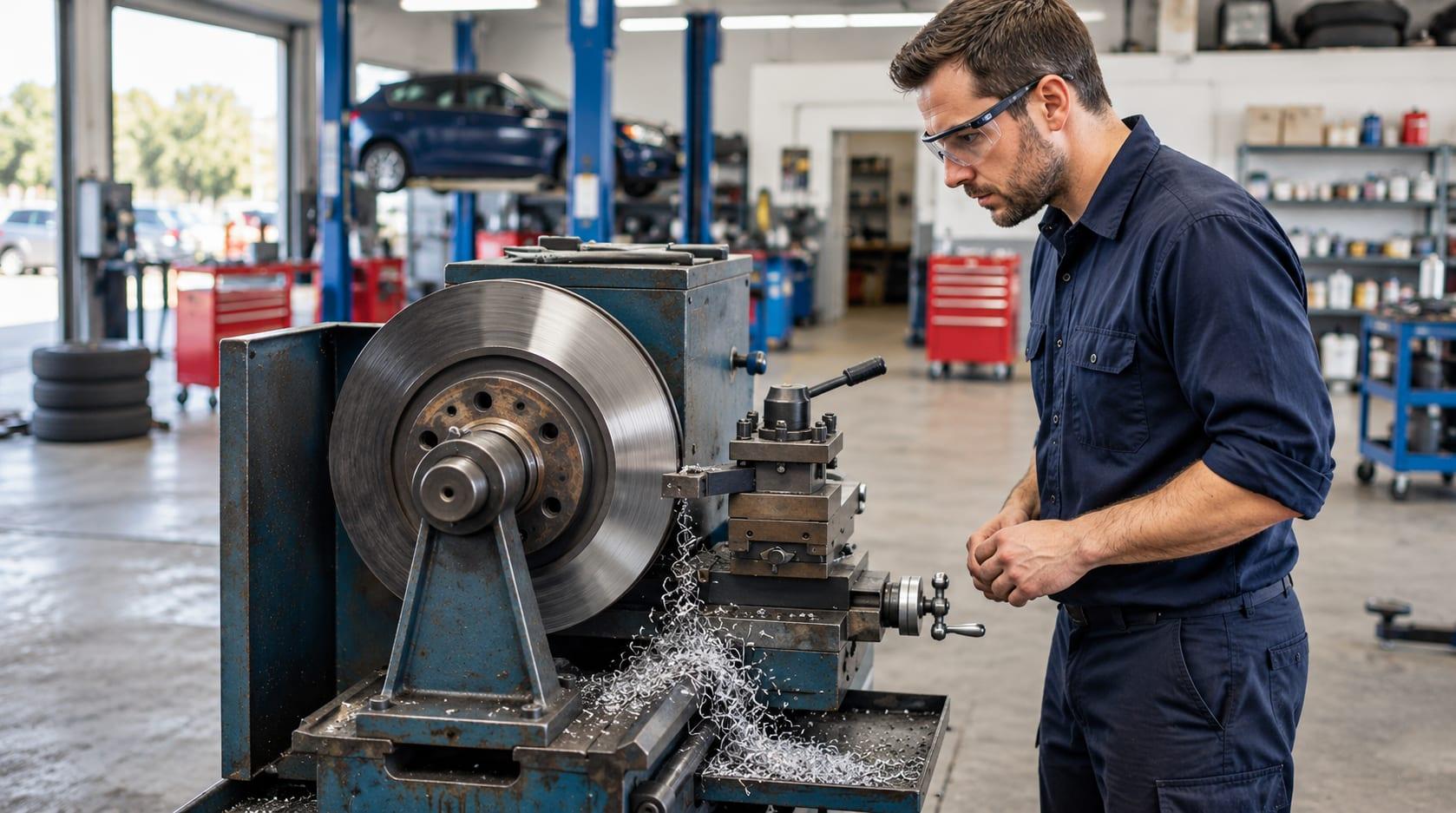
Rotor machining vs replacement. If the rotors are only lightly scored, they can be machined smooth on a brake lathe. If they are below the minimum thickness stamped on them, or badly worn, they need replacing. Many modern rotors are thin from new, so replacement is more common than it used to be.
Brake fluid flush. Brake fluid absorbs moisture over time, which lowers its boiling point. Most manufacturers list a flush every two years or so.
Caliper repairs. A sticking or leaking caliper (the clamp that pushes the pads onto the rotor) must be repaired or replaced, or new pads will wear unevenly.
Wear sensors. Many European cars, including BMW, Audi, Mercedes-Benz and Volkswagen, have an electronic wire that triggers the brake warning light when the pads are low. Once it has been triggered, it usually needs replacing with the pads.
| Job | Typical cost range (guide only) |
|---|---|
| Brake pad replacement and brake service, per axle | $280 to $500 on most cars, more for European and performance pads |
| Rotor machining | $50 to $100 per rotor |
| New pads and new rotors, per axle | $500 to $1,100 |
| Brake fluid flush | $80 to $150 |
| Pad wear sensor, fitted | $40 to $120 per sensor |
| Caliper repair or replacement | $200 to $600+ per caliper |
What affects the cost of brake pad replacement
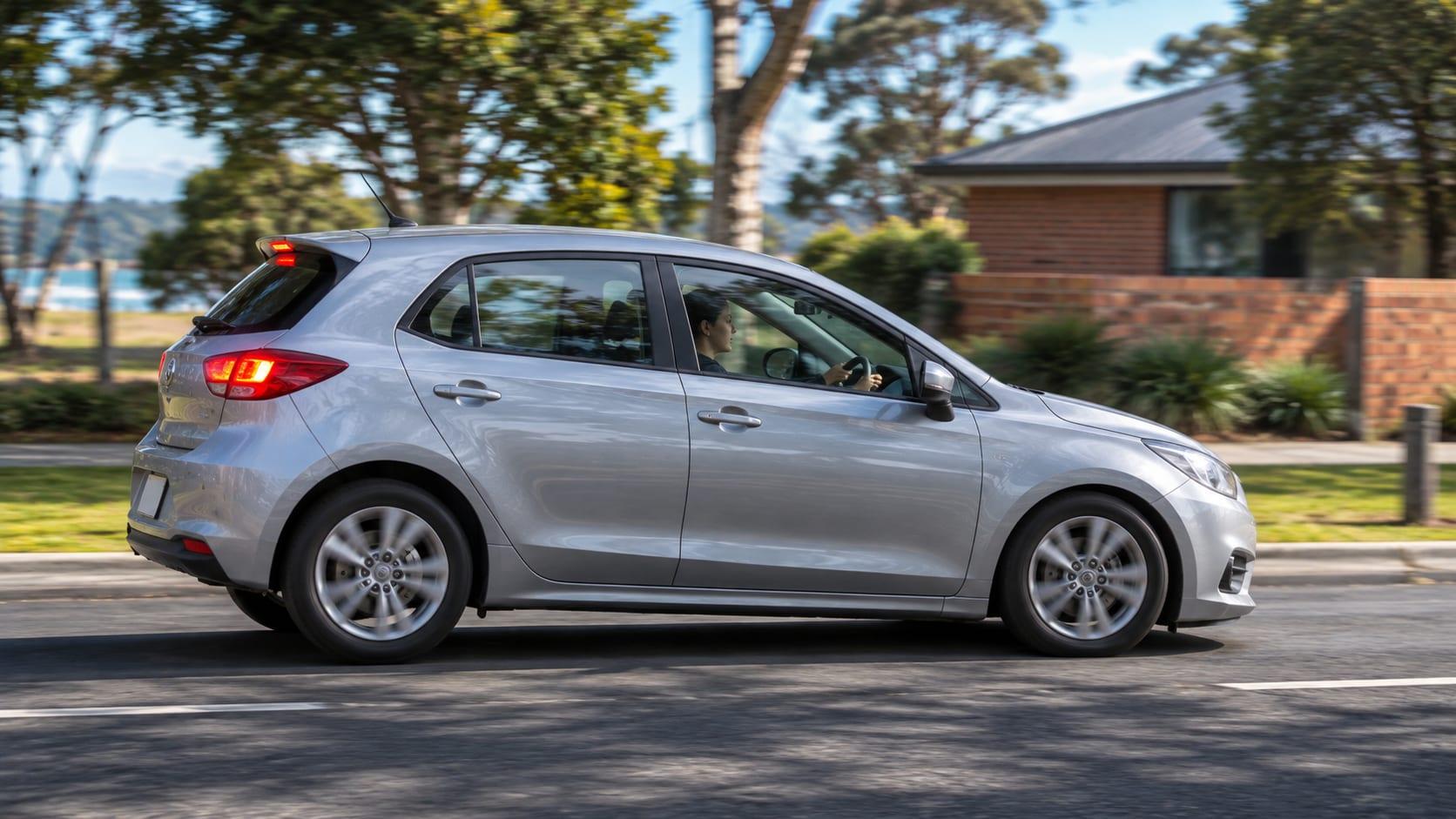
- Make and model. Pads and rotors for a common small hatch are widely available and well priced. Parts for less common or premium models cost more.
- European vs Japanese or Korean cars. European cars often use softer pads and rotors that wear together, plus wear sensors and electronic parking brakes. They frequently need pads and rotors at the same time.
- 4WDs, diesels and commercial vans. Heavier vehicles use bigger, more expensive brake parts and work them harder, especially when towing or carrying loads.
- Pad quality. Cheap pads can be noisy, dusty and short-lived. A good-quality pad that suits the car usually costs less over its life.
- Rotor condition. Healthy rotors keep the job near the lower end. Scored or thin rotors move it towards the upper end.
- How long the pads were left. Once a pad wears through to its metal backing plate, it grinds into the rotor. A pad replacement then becomes a pads-and-rotors job, sometimes with a caliper too.
Tools and equipment needed to change brake pads
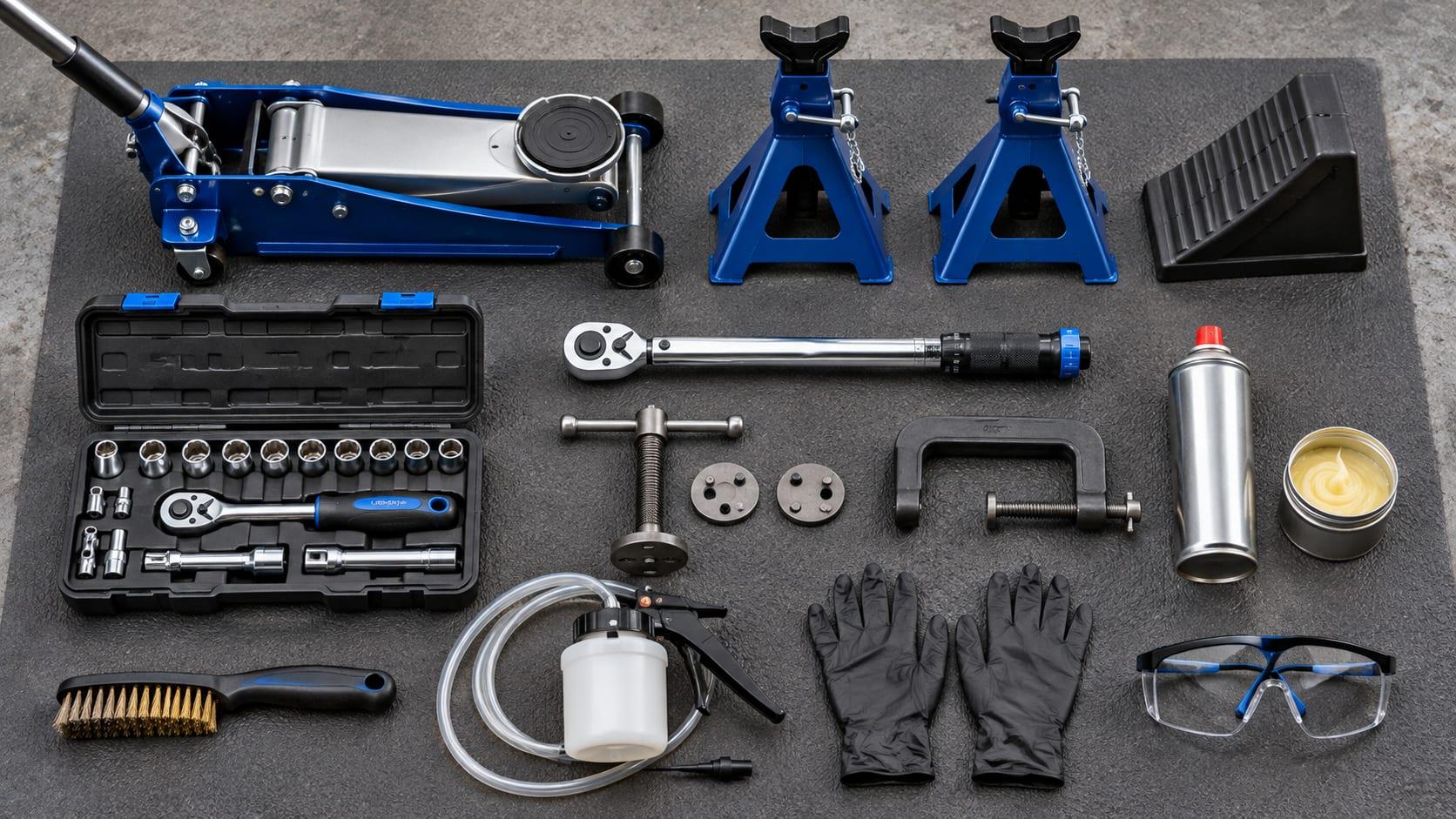
- Car jack and axle stands: lift the car and hold it safely. Never work under a car held only by a jack.
- Wheel chocks: stop the car rolling while it is raised.
- Wheel brace or impact wrench: remove the wheel nuts.
- Socket and spanner set: undo the caliper and bracket bolts.
- Torque wrench: tighten wheel nuts and caliper bolts to the manufacturer's specification.
- Brake caliper piston tool or C-clamp: push the caliper piston back to make room for thicker new pads. Many rear calipers need a wind-back tool because the piston must be turned as it goes in.
- Brake cleaner: remove brake dust and grease from the parts.
- High-temperature brake grease: lubricate slide pins and contact points.
- Wire brush: clean rust and scale off the caliper bracket.
- Brake fluid and a bleeding kit: top up or bleed the system if the fluid is old or air gets in.
- Gloves and eye protection: brake dust and brake fluid should stay off your skin and out of your eyes.
- Diagnostic scan tool: many newer cars with an electronic parking brake need one to open the rear calipers into service mode.
A calm word on safety: brakes are safety-critical. Wheel nuts and caliper bolts must be tightened to the correct torque, and new pads need bedding in (a series of gentle stops that beds the pads to the rotors) before they brake at full strength. Many modern cars also need a scan tool to work on the rear brakes. If you are unsure about any step, a qualified mechanic is the safer choice.
DIY vs professional brake pad replacement
| Factor | DIY | Professional mechanic |
|---|---|---|
| Cost | Parts only, about $50 to $400 per axle, plus any tools you need to buy | About $280 to $1,100 per axle, parts and labour |
| Time | Two to four hours for a first-timer | About an hour per axle, or 1.5 to 2 hours with rotors |
| Tools needed | Jack, axle stands, torque wrench, piston tool, and a scan tool on many newer cars | All supplied by the workshop |
| Risk | Incorrect torque, sticking calipers or air in the brake fluid can affect stopping | Fitted, checked and road-tested by a qualified technician |
| Warranty | Parts warranty only, and only if the parts were fitted correctly | Parts and workmanship warranty |
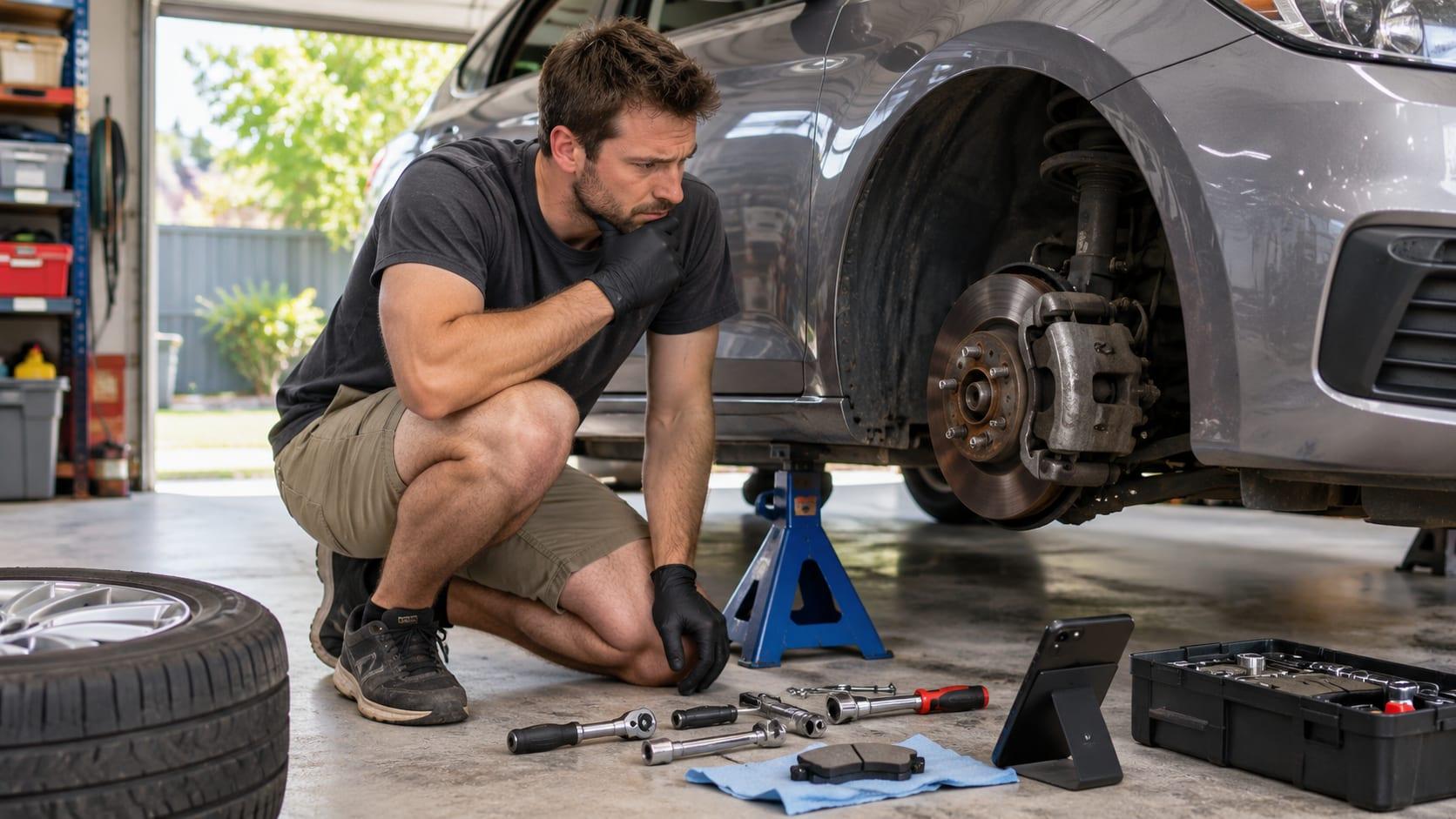
DIY can save money if you have the tools, the experience and a car without electronic parking brakes. For most drivers, a workshop is quicker, safer and comes with a warranty on the work.
Signs your brake pads need replacing
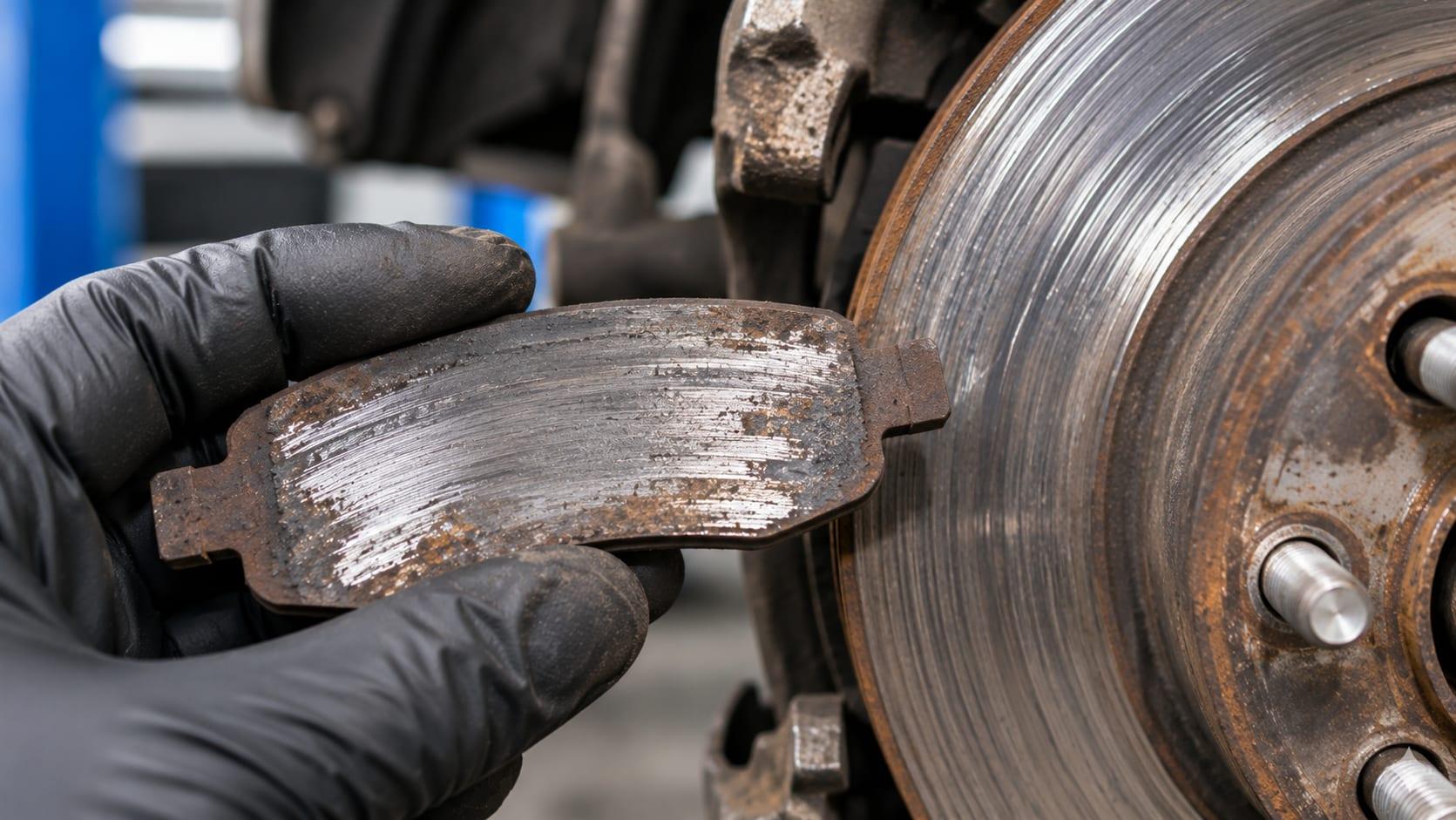
- Squealing or grinding. A high-pitched squeal is often the built-in wear indicator. Grinding usually means metal is touching the rotor.
- A brake warning light on the dashboard, common on cars with pad wear sensors.
- Longer stopping distances or a brake pedal that feels softer than usual.
- Vibration through the pedal when braking, which often points to uneven or warped rotors.
- The car pulling to one side under braking, which can mean a sticking caliper or uneven pad wear.
- Pads under 3 mm thick. Most pads start at around 10 to 12 mm. At 3 mm they are due for replacement.
If you notice grinding or the car pulls hard to one side, book an inspection soon. Leaving it usually turns a pads-only job into a pads-and-rotors job. Our guide to brake repairs Geelong drivers shouldn't put off covers the warning signs in more detail.
Brake pad replacement at Armstrong Creek Motors
Armstrong Creek Motors is a Bosch Car Service workshop in Grovedale, Geelong, open since 2021. We work on all makes and models up to 4.5 tonnes, including European cars, 4WDs, diesels and commercial vans.
- Upfront pricing. You get a quote before any work starts, with no hidden charges.
- Genuine or equivalent-quality parts, matched to your vehicle.
- Bosch Nationwide Warranty: 12 months or 20,000 km, $0 excess, honoured at around 200 Bosch Car Service workshops across Australia and New Zealand. See our warranty page for details.
- VACC accredited repairer.
- Free drop-off service within 25 km (T&Cs apply).
- Rated "Excellent" from 109 Google reviews.
Our brake, pad and rotor service covers everything in this guide, from pads and rotor machining to fluid flushes and caliper repairs. Brakes are also checked at every logbook service, so worn pads are picked up early.
Book your brake pad replacement in Grovedale
The cost of brake pad replacement is usually about $280 to $1,100 per axle, and the earlier worn pads are caught, the closer the job stays to the lower end. If your brakes are squealing, grinding or just feel different, we can check them and give you a clear quote before any work starts.
Book online or call 03 4206 0208. You will find us at 5/148-154 Marshalltown Road, Grovedale VIC 3216, open Monday to Friday 8am to 5pm, and Saturday by appointment.
Was this article helpful?